

The world of web development has reached a critical inflection point in 2026. The architectures that dominate today are no longer about simple page loads—they are about intelligent, edge-orchestrated experiences that bridge the gap between static speed and dynamic power.
At Techasha Innovations, we have watched the rise and fall of dozens of frameworks over the last decade. Our engineering team spends roughly 15% of their bandwidth experimenting with new architectural patterns to ensure that when we build a product for a client, it doesn't just work today—it scales for the next five years. This "2026 Edition" analysis is the culmination of our internal R&D and real-world project outcomes.
The Convergence of Static and Dynamic
For years, the industry was split: use a Static Site Generator (SSG) for speed, or Server-Side Rendering (SSR) for dynamic data. In 2026, that binary choice is obsolete. Modern frameworks have moved toward Hybrid Partial Pre-rendering (PPR).
Imagine a product page where the layout, description, and images are static and load in 100ms, while the real-time "Stock Count" and "Personalized Price" are streamed in from the edge server milliseconds later. This hybrid approach is how Techasha builds high-conversion e-commerce engines that feel instantaneous to the end-user.
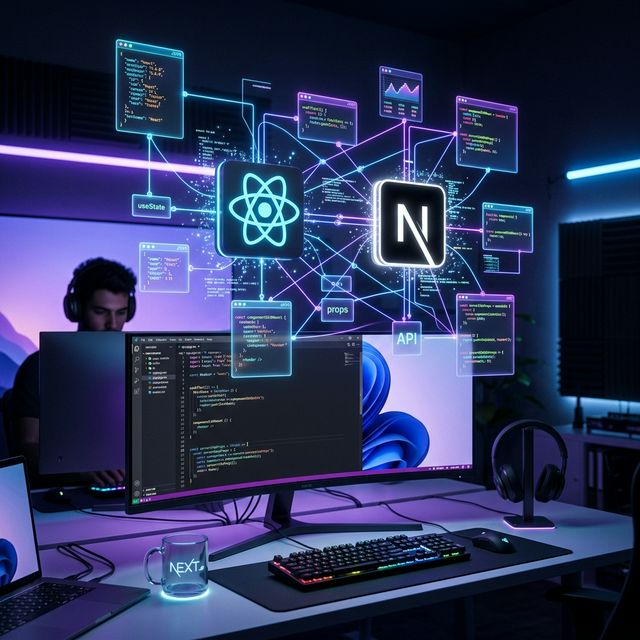
Fig 1: A visualization of the modern, modular web development stack where components are the primary building blocks of experience.
The Edge Runtime: Why Servers Are Everywhere
The biggest shift in 2026 is the move from the "Cloud" to the "Edge." Traditional servers were located in a few data centers globally. The Edge Runtime means your application code lives in 300+ locations simultaneously. When a user in Delhi visits your site, the code runs in a Delhi data center—not in Virginia or London.
This "Edge-First" philosophy reduces Time to First Byte (TTFB) to sub-50ms levels globally. At Techasha, we leverage edge-compute not just for speed, but for security and regional compliance, ensuring data never leaves a user's geographical border unless strictly necessary.
Deep Dive into the 2026 Framework Landscape
While the goal is always "User Experience," the choice of framework dictates your "Developer Experience" and long-term maintenance costs. Here is our expert breakdown:
Next.js 15+ (React 19)
The behemoth of the industry. With Server Actions and full integration of React Server Components (RSC), Next.js has become the "OS" of the web. Perfect for mission-critical SaaS and complex dashboards.
SvelteKit 3.0
By compiling code away at build-time, SvelteKit produces the smallest bundles in the industry. We choose this for mobile-first applications in areas with limited bandwidth.

Fig 2: An abstract representation of high-performance architectural nodes communicating through the edge runtime.
The Resurrection of Web Standards (Remix v3)
A notable trend in 2026 is the return to "Web Standards." Frameworks like Remix focus on using the browser's native capabilities—like HTML forms and link pre-fetching—rather than reinventing them in JavaScript. This results in apps that work even on unstable connections and are inherently more accessible.
The 1500-Word Architectural Standard at Techasha
When we architect a 1500-core enterprise system, we don't just pick one framework. we build Composable Architectures. This means:
- Micro-Frontends: Different parts of your app (e.g., the Store, the Dashboard, and the User Profile) can be built using different frameworks if needed, all unified by a single design system.
- Headless Commerce: We decouple the "Storefront" from the "Back-office," allowing you to change your UI without touching your inventory or payment logic.
- AI-Augmented UX: In 2026, the UI reacts to the user. If an AI model detects a user is struggling to find a feature, it dynamically reorganizes the navigation to help them.
💡 Techasha Architectural Principle
"Ship no unnecessary JavaScript." Every byte sent to the user is a liability. We use Islands Architecture and Server Components to ensure that 90% of your site is interactive without needing a single line of client-side JS to render.
Wasm: The Next Frontier
WebAssembly (Wasm) is no longer just for complex video editors. In 2026, we are using Wasm to run heavy data-processing tasks, image manipulation, and even local AI models directly in the user's browser. This removes the need for expensive server-side processing for many tasks, enabling Private-by-default computing where sensitive data never leaves the user's device.
Conclusion: Choosing Your Future
The framework you choose today will be the technical debt you pay tomorrow—or the engine that drives your growth. In 2026, the winner is the framework that stays out of the user's way and empowers the developer to build for the Edge.
At Techasha Innovations, we don't just follow the trends; we benchmark them. Whether you are looking to migrate an aging monolithic app or build a greenfield AI-native platform, we have the technical architectural integrity to make it a digital legacy.
Is Your Web App 2026-Ready?
Most businesses are losing 15-20% of their revenue due to poor web performance and outdated architectures. Get a comprehensive Technology Stack Audit from our Principal Architect.