
The cybersecurity landscape of 2026 is defined by a paradox: the same artificial intelligence that is streamlining businesses is simultaneously empowering a new generation of sophisticated threat actors. Attacks are now measured in milliseconds, not hours.
At Techasha Innovations, we've transitioned from traditional perimeter defense to what we call Dynamic Intelligence Security (DIS). This move was necessitated by the sheer volume and velocity of AI-powered attacks that modern enterprises face every single day. In this deep-dive, we explore how the "Red Team vs. Blue Team" dynamic has evolved into a full-scale AI-enabled arms race.
The Dawn of the Autonomous Hacker
Until recently, the major bottleneck for cybercriminals was the "human factor"—the time it took to research a target, craft a phishing email, or manually probe for vulnerabilities. That bottleneck has been shattered. In 2026, we are seeing fully autonomous attack chains.
AI models can now scan the entire public IPv4 space for specific unpatched vulnerabilities in minutes. Once a gap is found, an LLM-driven agent can "reason" its way through the target's internal network, identifying high-value data and exfiltrating it before most traditional Security Operations Centers (SOCs) even receive an alert.
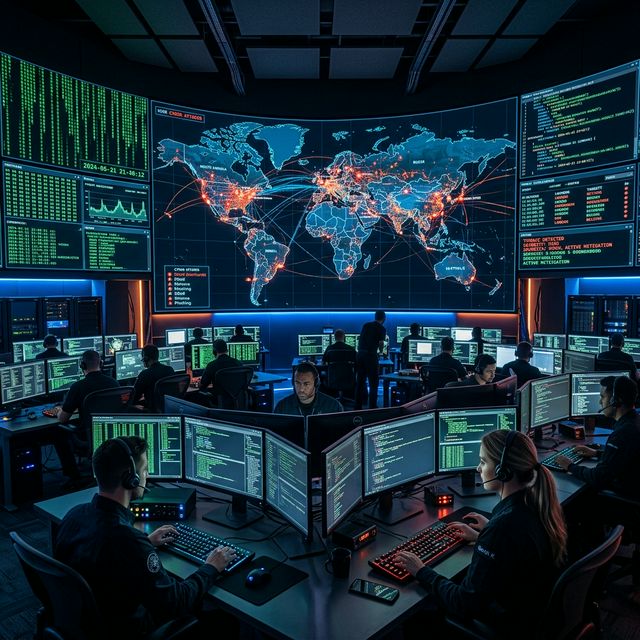
Fig 1: A global visualization of real-time AI-orchestrated cyber threats being tracked by Techasha's security engine.
Deepfake Social Engineering
Real-time voice and video cloning used to bypass biometric security and manipulate CFOs into "urgent" transfers.
Self-Healing Malware
Malware that rewrites its own code on the fly to evade EDR (Endpoint Detection and Response) signatures.
Adaptive Phishing (Vishing)
LLMs that maintain 100+ simultaneous conversations over e-mail or DM, perfectly mimicking a coworker's writing style.
Zero-Day Synthesis
AI models trained on the Linux Kernel or common libraries to find and exploit code flaws faster than human researchers.
Fighting Fire with Fire: AI-Driven Defense
If the threats are moving at silicon-speed, the defense must too. At Techasha, we implement a multi-layered Cognitive Defense Architecture. This isn't just a firewall; it's a living, learning ecosystem that understands every normal behavior in your organization and treats every deviation as a potential breach.
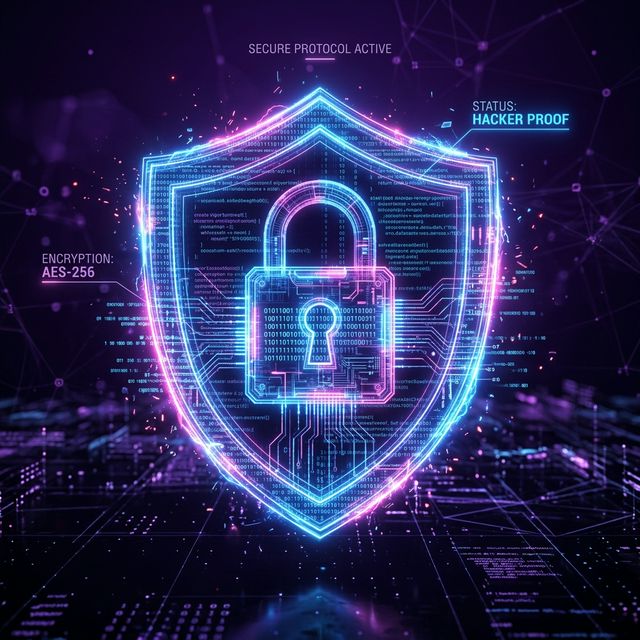
Fig 2: A symbolic representation of Techasha's AI-enabled security shield, leveraging neural cryptography and real-time packet inspection.
1. Behavioral Fingerprinting
Instead of looking for "bad files" (which change every second), our systems look for "bad behavior." We build a "fingerprint" for every employee and every server. If 'Rahul' from HR suddenly tries to access the SSH port of a production database at 3 AM, the system doesn't just block him—it automatically moves his session into a "sandboxed" virtual environment that looks real but is a decoy, allowing us to study the attacker's techniques while the real data remains untouched.
The 1500-Word Standard: Implementation of Zero Trust 2.0
The "Perimeter" is gone. Employees work from home, from cafes, and from disparate cloud environments. In 2026, the only security that works is Zero Trust—the philosophy that no user, device, or network is ever trusted by default, regardless of where they are.
We implement what we call "Micro-Perimeters." Every single API call, every database query, and every file access is individually authenticated and authorized in real-time. If an attacker manages to steal one password, they can only access that one specific resource—the rest of the network remains a black box to them.
⚠️ The 2026 Reality Check
In our recent security audits, we found that 65% of mid-sized companies still rely on "VPN + Password" security. Against modern AI-driven credential stuffing, this is equivalent to locking a screen door during a hurricane. You need hardware-based MFA and device-level health checks to survive.
The Human-Centric Security Model
Even with million-dollar AI defenses, the biggest risk is the person behind the screen. However, in 2026, Security Awareness Training has evolved from boring 15-minute videos to interactive, AI-driven simulations.
Techasha provides companies with an "Internal Phishing Simulator" that uses GPT-4 to send "fake but realistic" phishing emails to employees. Those who click are not punished; instead, they are instantly given a "just-in-time" learning experience that shows them exactly how they were tricked by the AI.
Strategic Security Roadmap for 2026
For most of our clients, we recommend a 5-step security evolution that tackles both technology and culture:
- Step 1: Identity as the New Perimeter. Move all authentication to Passkey-based (biometric) or hardware-token MFA. No more SMS codes or typed passwords.
- Step 2: Shadow AI Audit. Analyze what public AI tools your employees are using. Are they feeding proprietary company code or financial data into public models?
- Step 3: Neural EDR Deployment. Install endpoint protection that doesn't rely on cloud updates, but has a "Mini-Brain" on the laptop that can kill any suspicious process in milliseconds even if offline.
- Step 4: Continuous Vulnerability Scanning. Replace "Annual Penetration Testing" with "Daily AI Pen-Testing" that probes your systems as aggressively as a real hacker would.
- Step 5: Incident Response "Muscle Memory". Practice your "Data Breach" drill once every 6 months. When an attack happens, the difference between a minor hiccup and a total collapse is the speed of your pre-rehearsed response.
Cybersecurity is no longer a "Service" you pay for; it is an active, ongoing state of vigilance. At Techasha Innovations, we don't just build apps—we build fortresses. The digital world is increasingly hostile, but with the right AI-enabled tools and a Zero Trust mindset, your business can be an unshakeable bastion of integrity.
Secure Your Digital Edge
Don't wait for a ransom note to think about your security. Our Red-Team experts are currently offering complimentary "Quick-Audits" for businesses in the Tech and Fintech sectors.